
Hail Damage Roof Repair in Grand Prairie, TX
The storm is random. The response should not be.
Dallas County logs hail every single spring, and Grand Prairie has taken direct hits, including ping-pong-ball stones over the municipal airport in May 2024. What matters afterward is a calm, dated record of what the storm did.
Call (469) 350-4206
Tell us the storm date if you know it. A local roofer follows up the same day.
What hail really does to a Grand Prairie roof
Hail almost never punches a visible hole. It crushes the granule surface into the asphalt mat, and from that day the shingle ages on fast-forward: the bruise sheds granules, ultraviolet light eats the exposed mat, and the leak arrives a season or two after everyone stopped thinking about the storm.
Wind works differently, creasing and lifting shingles along ridges and edges; the county record shows gusts to 96 mph in recent seasons. Neither kind of damage reads well from the ground, which is why the response that protects you is documentation: every slope photographed, with dates, so whatever you decide about a claim rests on evidence rather than a salesman's urgency.
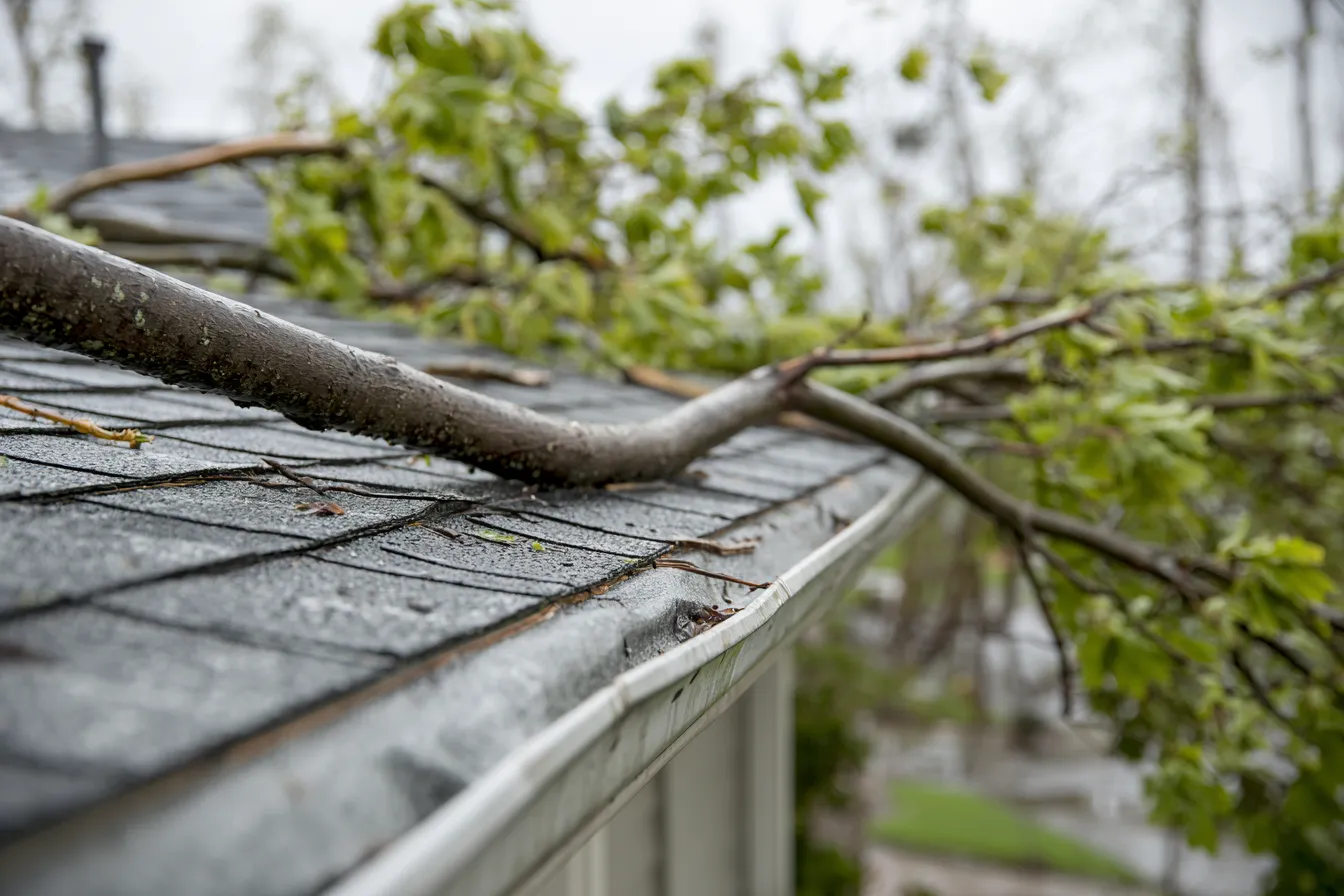
After a storm, look for these from the ground
Safe-from-the-yard tells that the roof took real damage:
- Granules washing out of downspouts like coarse coffee grounds
- Dents in gutters, mailbox tops, vents, or the AC unit's fins
- Shingles with dark, shiny, or pockmarked patches after the sky clears
- Creased or flipped-up shingle tabs along ridge lines and roof edges
- Neighbors with tarps or roofer signs after the same storm cell
Metal dents are especially useful: they date the storm and corroborate the roof damage. A free documented look turns all of it into usable evidence.
What the storm documentation covers
Built the way an insurance reviewer will actually read it.
The file is yours whether or not you ever file a claim. That is the point of building it early.
Every slope, on its own record
Storm cells hit directionally, so each plane is photographed separately rather than letting one clean slope speak for the roof.
Bruising and granule loss, dated
The hail signature gets close-up, time-stamped photos, the evidence that separates storm damage from ordinary wear.
Wind creasing and edge lift
Folded tabs and lifted edges get logged alongside the hail, since DFW cells usually deliver both at once.
The collateral record
Dented vents, gutters, and soft metals corroborate the date and the intensity, and they belong in the file.
From storm to settled, without the circus
The calm version of a process that storm-chasers love to rush.
Document the Roof
Soon after the storm, every slope goes on the record in dated photos, before weather and time blur the evidence.
Decide With the File
With the evidence and the repair figure side by side, you choose: claim, out-of-pocket repair, or wait. Your roofer can be on site when the adjuster walks the roof.
Rebuild to Spec
Once the path is set, the work is done to manufacturer spec, with impact-rated options priced if you want the roof tougher than the last one.
Storm and claim questions, answered plainly
What Grand Prairie homeowners ask in the week after hail.
Get the storm on the record
A local roofer documents every slope in dated photos and hands you the file. Then you decide, on your own schedule, with the evidence in hand.
Tell us where to reach you and a local roofer follows up the same day.
Or call (469) 350-4206